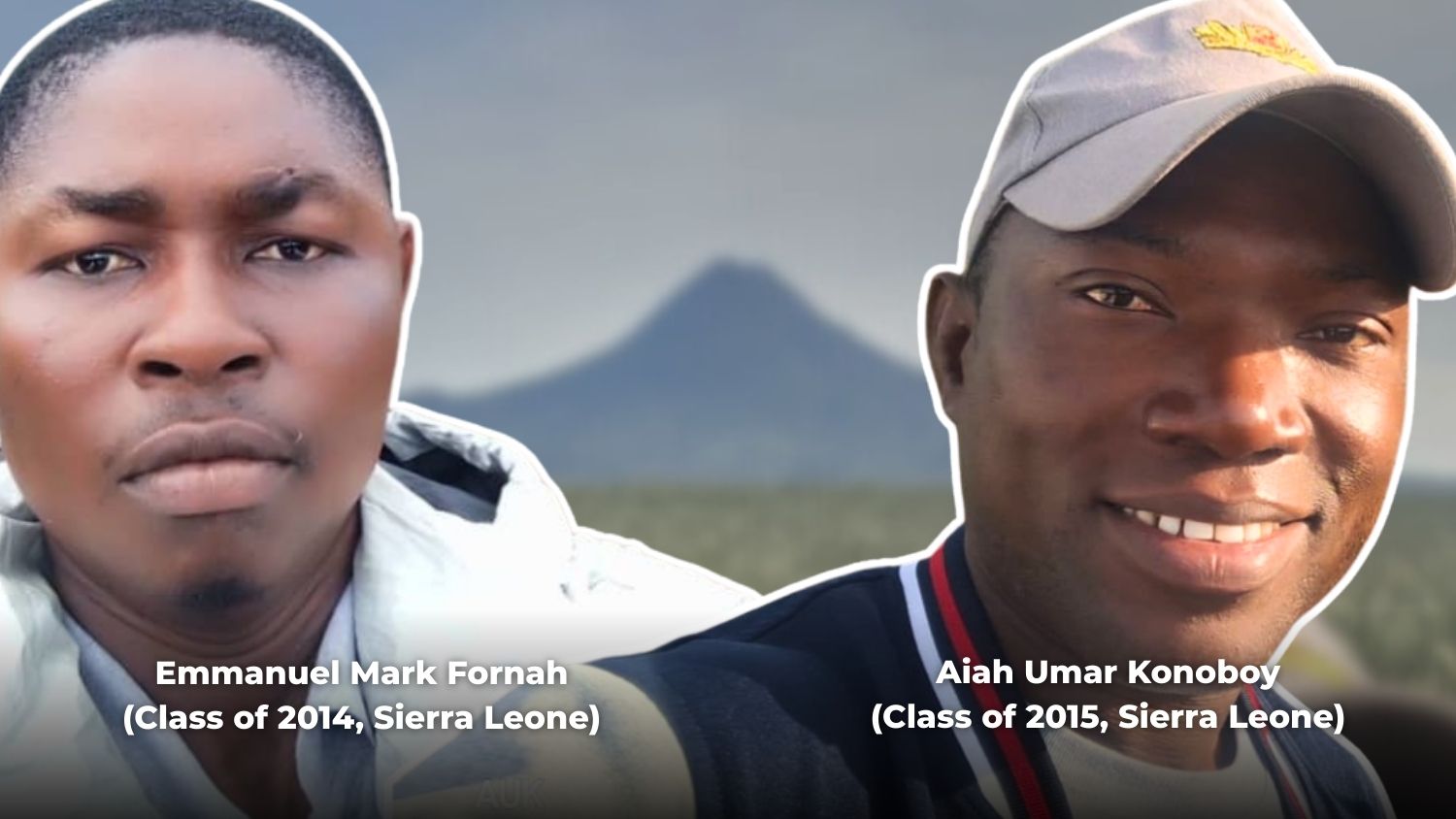
Emmanuel Mark Fornah (Class of 2014, Sierra Leone)
Emmanuel Mark Fornah was well into completing a Bachelor in Agricultural Sciences when he one day heard a segment on the radio about EARTH University. Intrigued, he attended an information session and soon after began the application process. Emmanuel recalls the interview processes, particularly the group interviews, where he and his fellow applicants were tasked with a real-world scenario to problem-solve. He was energized by EARTH’s practical learning approach, even at the interview stage. Eventually, after completing the application process, he found that not only was he accepted, but he had also been awarded a scholarship.
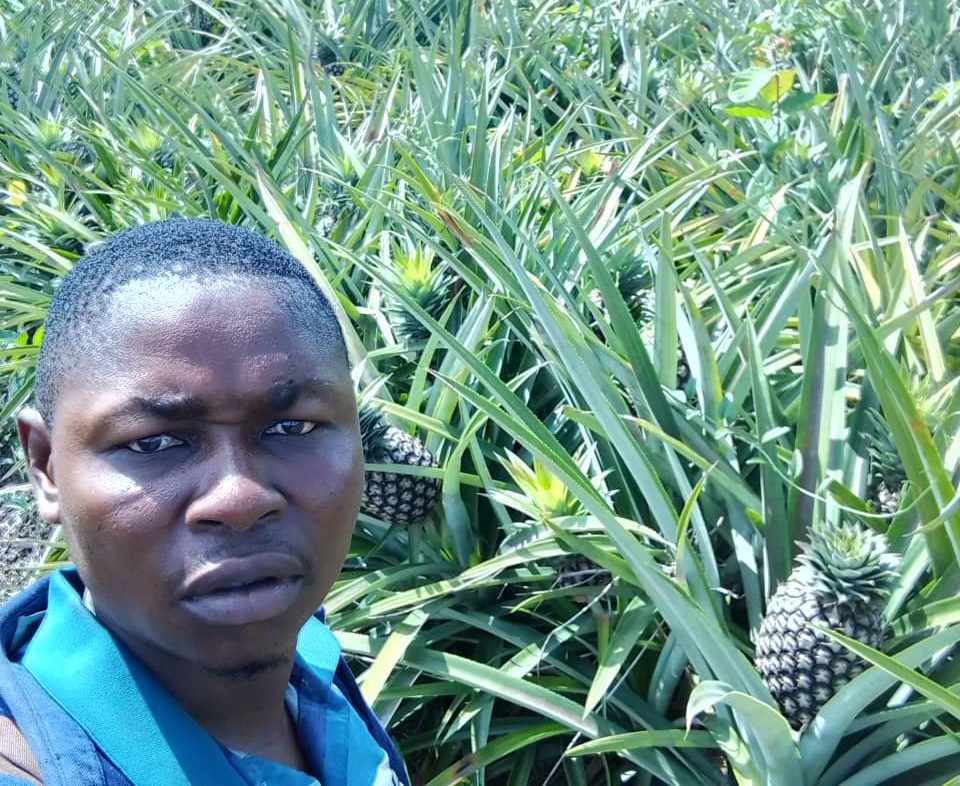
Emmanuel’s experience at EARTH differed greatly from the degree he had been working on. In Sierra Leone, his education was almost entirely theoretical. At EARTH, everything he learned in the classroom he saw come to life in the field: “It was real agriculture, real crops, and real experiments,” he says.
Towards the end of his four years at EARTH, one day a professor asked Emmanuel, “If you were asked to go home without your degree, would you do it?” Emmanuel, baffled, replied, “Of course not!” The professor asked, “Why? You could still use your knowledge.” At the time, Emmanuel couldn’t imagine leaving without his degree, which represented his hard work and the completion of his education. He didn’t understand why the professor had asked him this.
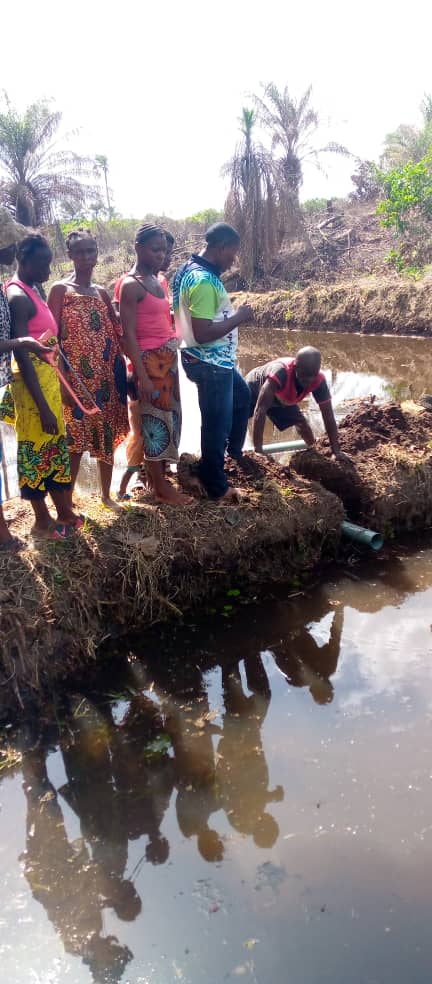
However, upon returning to Sierra Leone after graduation, Emmanuel faced many obstacles in trying to find a job. He found that it was difficult to connect with people, many of whom didn’t understand why he had left home to go to Costa Rica and study. While job searching, Emmanuel started a garden on his sister’s land, where he produced eggs, hot peppers, and other vegetables. Eventually, his business started growing and became profitable. In that moment, Emmanuel recalled his professor’s question and understood why he had asked that question. EARTH had equipped him with knowledge to survive and thrive, not just given him a degree on paper: “EARTH really prepares leaders that can create jobs,” he reflects.
Aiah Umar Konoboy (Class of 2015, Sierra Leone)
Aiah Umar Konoboy grew up in a rural agricultural community where both of his parents were farmers. Despite nearly all the community making a living from agriculture, productivity levels were far below the full potential of the land. Inspired by his community and the need to support his family, Aiah began studying Agriculture at a polytechnical school. As his passion for the subject grew, Aiah learned about EARTH University and decided to apply, drawn to the values of integrity, hard work, stewardship of natural resources, and the focus on community development.
Academically, Aiah was impressed by EARTH’s learning-by-doing approach, the interconnection between theory and practice, and the natural environment on Campus which he described as “un pedazo del cielo” (a “slice of heaven”). The community at EARTH acted as good stewards of the land, from the campus entrance to the farms.
“My time at EARTH made me realize that we can do more if we put people first. We can do more if we listen to people. We can do more if we believe that we are the best people to bring needed change,” Aiah shares. At EARTH he was also inspired by peers to return to his country following graduation and become a change agent equipped with the skills necessary to support his community. Since graduating, Aiah implemented these concepts to work with smallholder farmers, youth, women, and marginalized communities in Sierra Leone, empowering them to “be their own change.”
Crossing Paths After Graduation
Today, both Emmanuel and Aiah are working for Sierra Tropical Ltd., a Dole affiliate company in pineapple production and the only Dole affiliate in West Africa. In 2021, when they were first interviewed, the director of the company, a Costa Rican, was fascinated to see people who had studied in Costa Rica come back to apply their knowledge in Sierra Leone. In the interview process, they were both able to prove their qualifications to work on the farm. This again reminded Emmanuel that his EARTH education was more than the physical degree he had received, it was the knowledge and real skills he had gained. Both Emmanuel and Aiah were hired as Senior Supervisors, working with company leadership and with employees in the farm.
After two years, both Emmanuel and Aiah were promoted to the position of Superintendent, where they currently manage different parts of the fruit production process. Aiah manages the growing phase, which involves everything from land preparation, creating maps and roads, to planting the crop. Emmanuel oversees field maintenance, which encompasses crop care all the way to harvest. These two phases are naturally integrated, and thus, their success depends a lot on collaboration.
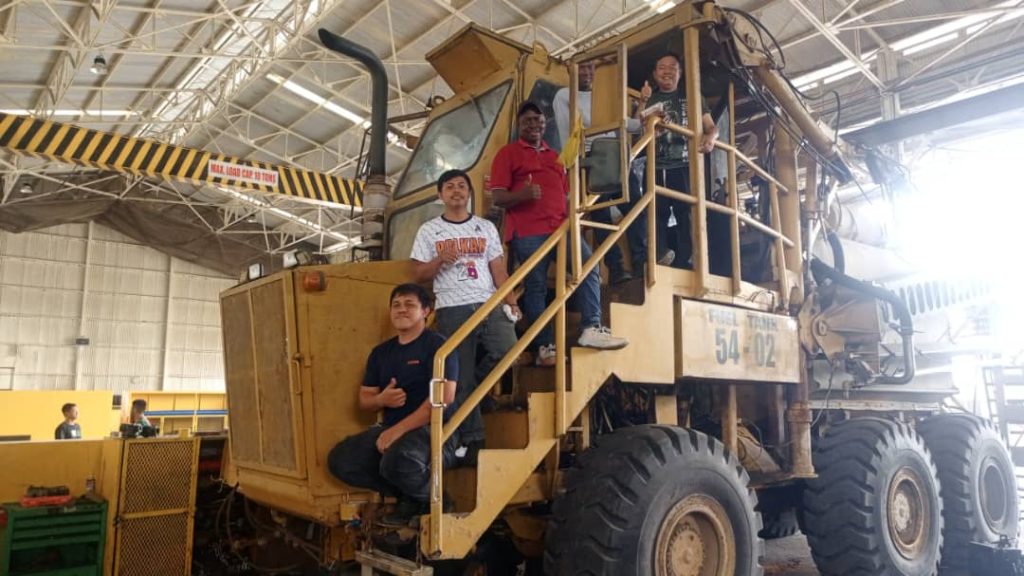
From their EARTH interviews to their leadership positions today, Emmanuel and Aiah’s education remains a distinguishing factor in their professional lives. Their growth and responsibility in the place they now work are direct reflections of the managerial, people, and field skills they gained at EARTH. Recently, the two were sent to the Philippines to learn about solutions and best practices they could bring back to Sierra Leone. Emmanuel and Aiah’s experiences there reminded them of their time at EARTH, in how people from different backgrounds can come together to work and to share perspectives on best agricultural practices that can improve the land and people’s lives.