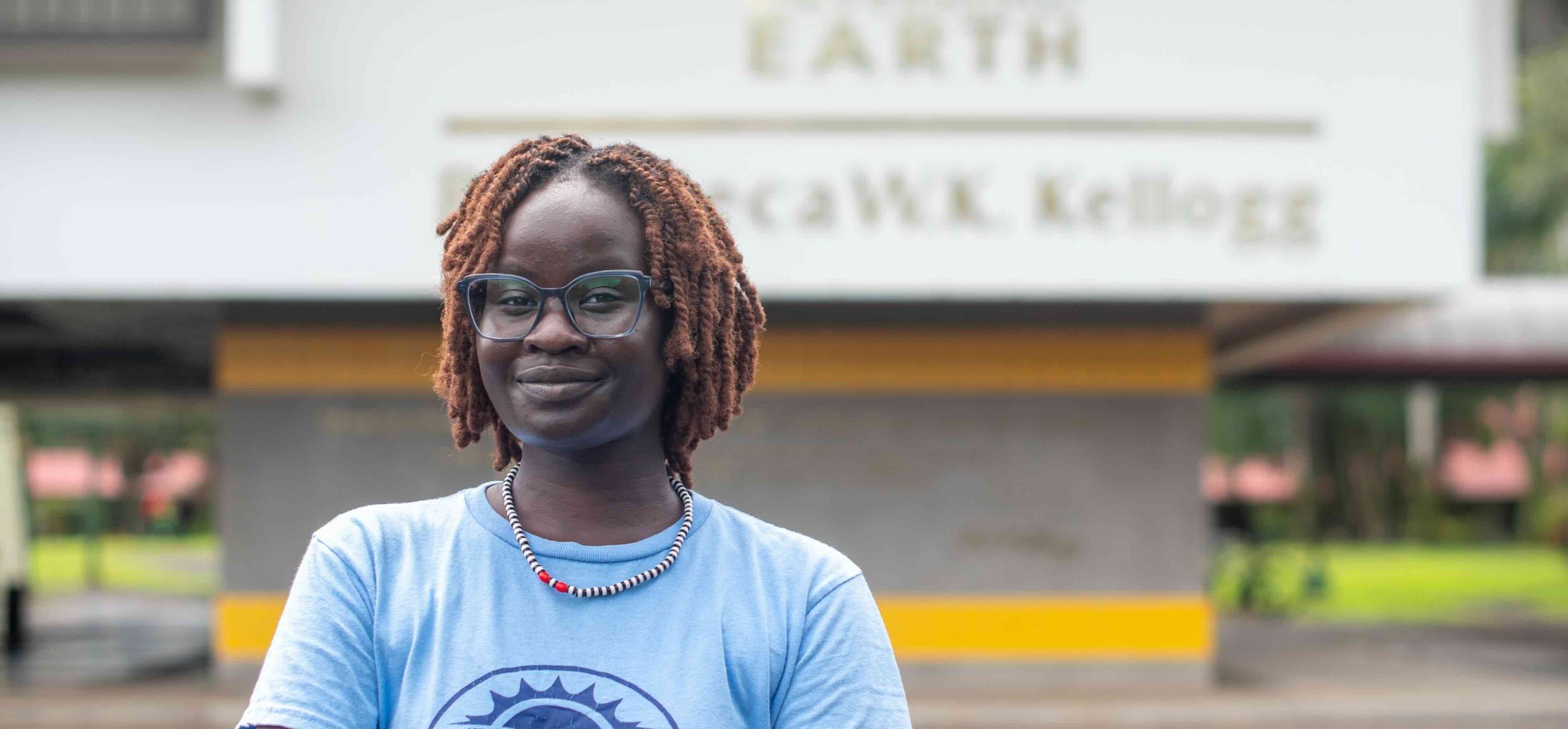
Racheal Adol Ajang (Class of 2026), a Mastercard Foundation Scholar at EARTH University, has never visited her country of South Sudan. “I am South Sudanese,” she says confidently, “but I have never been there.” Racheal was born in Kakuma Refugee Camp in Kenya. She is one of approximately 1.5 million South Sudanese children worldwide who grew up in a refugee camp because their parents fled conflict. Today, according to UNHCR counts, there are over 41.6 million refugees in the world. In Kenya, under both international and national law, refugees maintain this status as long as their homeland remains too unsafe or unstable for them to return. Although many may see this background as a major challenge, this experience has instilled in Racheal a steady strength and unwavering determination to find new opportunities, keep moving forward, and make an impact wherever she goes.
That resolve led her to apply to EARTH. Now almost four years into her journey studying agricultural sciences, learning about topics including soil, crop production, and agribusiness, Racheal looks to the future as she remembers her past—with a clear understanding of who she is and where she comes from. “The refugee camp is the place that built me. There were people at the camp from all cultures and backgrounds. It was there I learned independence.”
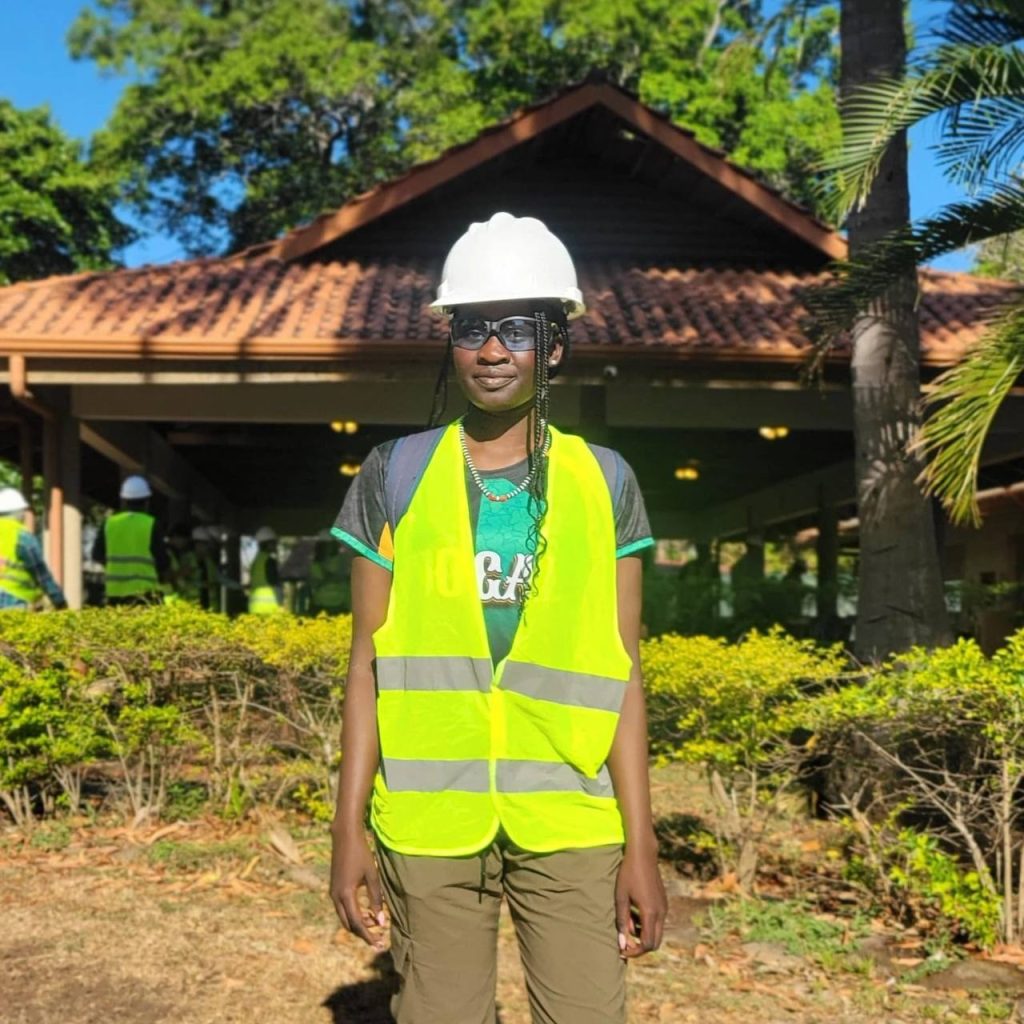
Racheal’s unique academic journey began early in life. After being awarded a scholarship when she was a young girl, she left the camp to study at a boarding primary school and then high school in another province. After completing her secondary studies, she returned to the camp, and within a short time began to teach in the camp’s secondary school to earn money and give back to the community. Seeing the many needs around her, she began taking initiative to create a positive impact in her community. “As I started teaching, I began to see even more how little support the young girls around me had to get a good education.”
First she became involved in the Youth Drive Association, a grassroots community organization dedicated to empowering young people. Over time, she took on greater leadership responsibilities and later became the chairperson of the association. “We organized trainings and awareness programs for both young women and young men on topics such as entrepreneurship, leadership, education, and the challenges associated with early marriage.”
As her passion for supporting girls continued to grow, she founded the Girl Care Initiative, a platform focused on empowering girls through education, mentorship, and life-skills training. “I wanted girls who lacked access to educational opportunities to see that they had other pathways to success and could become leaders in their own communities. They could look to someone like me and see what is possible. I could say, ‘You see where I am, I am from the same place you are from, and I did this.’ We are working to give them a new mindset.” To this day, Racheal is involved with the organization, and she remains committed to expanding opportunities for refugee youth wherever she is.
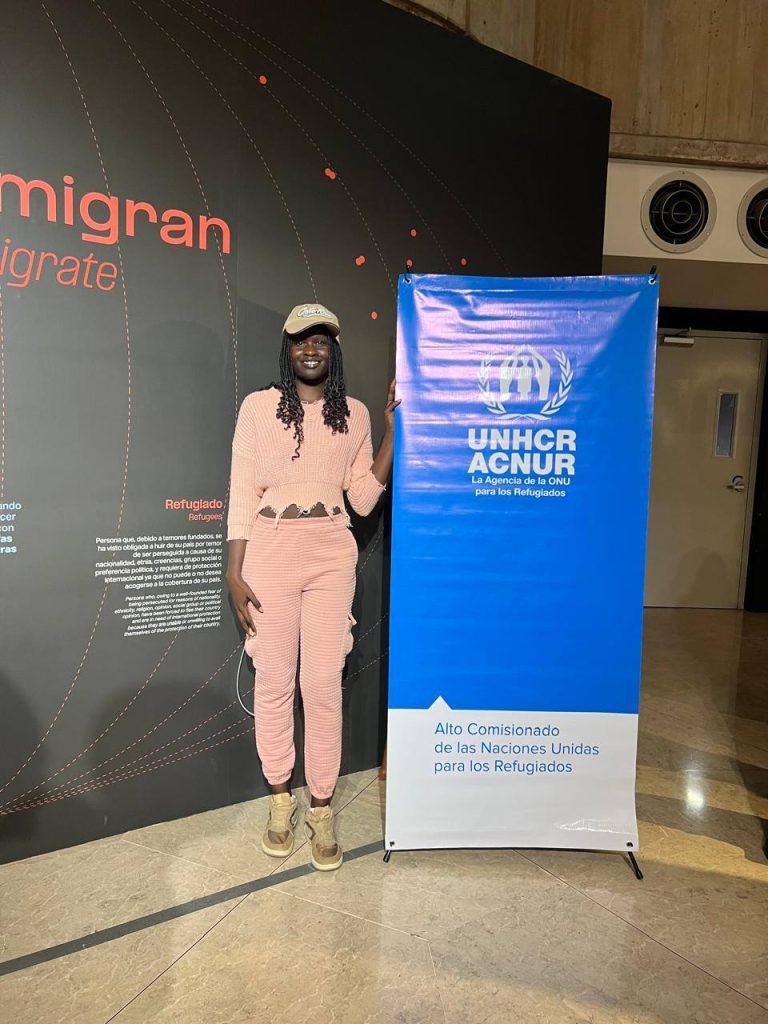
It was while she was teaching and working with young girls at the refugee camp that Racheal first heard about EARTH. Although her background was not in agriculture, she saw this as an opportunity to one day establish her own company, own her own land, and make an impact in the community. “Being at EARTH has been a really good thing for me. I’ve learned so much from my colleagues from different cultures. I love how I’ve been able to explore different fields in agriculture. I feel like I can do anything through agriculture.”
For her third-year Internship, Racheal traveled to the University of Mauritius to work in the Microbiology lab studying soil samples to identify the microbes in the soil. This year she is working on her Graduation Project, identifying and comparing effective and economically sustainable pest management strategies used for the Fall Armyworm with the goal of increasing maize productivity. For the Work Experience course that is weaved into each year of EARTH’s learning by doing curriculum, she is serving as the team leader of her fellow students who are assisting a local women’s association engaged in crop production, livestock farming, and small business development.
After she graduates, Racheal hopes to obtain a master’s degree in Soil Science. She sees this as her best next step towards building a strong career. Eager to continue her studies, she is carefully planning her next steps. We are confident that Racheal will do just this.