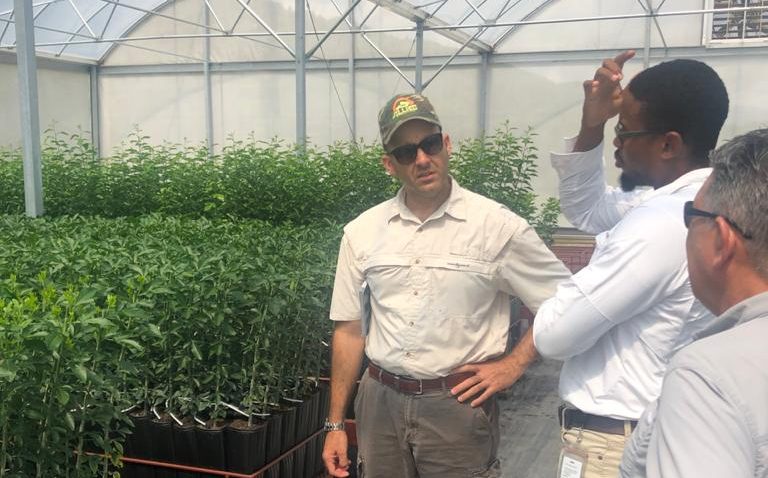
Frankys de la Osa (Class of 2002, Cuba) recalls, by name, the people who shaped his experience at EARTH University. He remembers how Professor Carlos Burgos was one of the people who helped him enter the University; he remembers the enthusiasm with which Yanine Chan, now Dean, taught Food Processing; he knows it was in Professor Irene Alvarado’s Entrepreneurial Projects course where he gained many of the tools that would later help him build his own family business; and he has never forgotten the adventures with Professor Pánfilo Tabora, who showed him, in many ways, the value of curiosity as a path to turning ideas into tangible projects. Frankys has an enviable memory, and when you talk with him, it’s clear that he uses his memory to honor the people who have crossed his path, not only with words but also through actions.
Frankys and his family left Cuba in 1997 due to the political situation. They arrived in Mexico hoping to begin a new life. He was young and at a pivotal moment shared by anyone who has the opportunity to choose a career path: he needed to decide what to study at college. In Cuba, he had focused on Exact Sciences and initially he thought he wanted to continue in that field. But his father, an agronomist, encouraged him to follow in his footsteps. After hearing about EARTH from several people, he decided to apply.
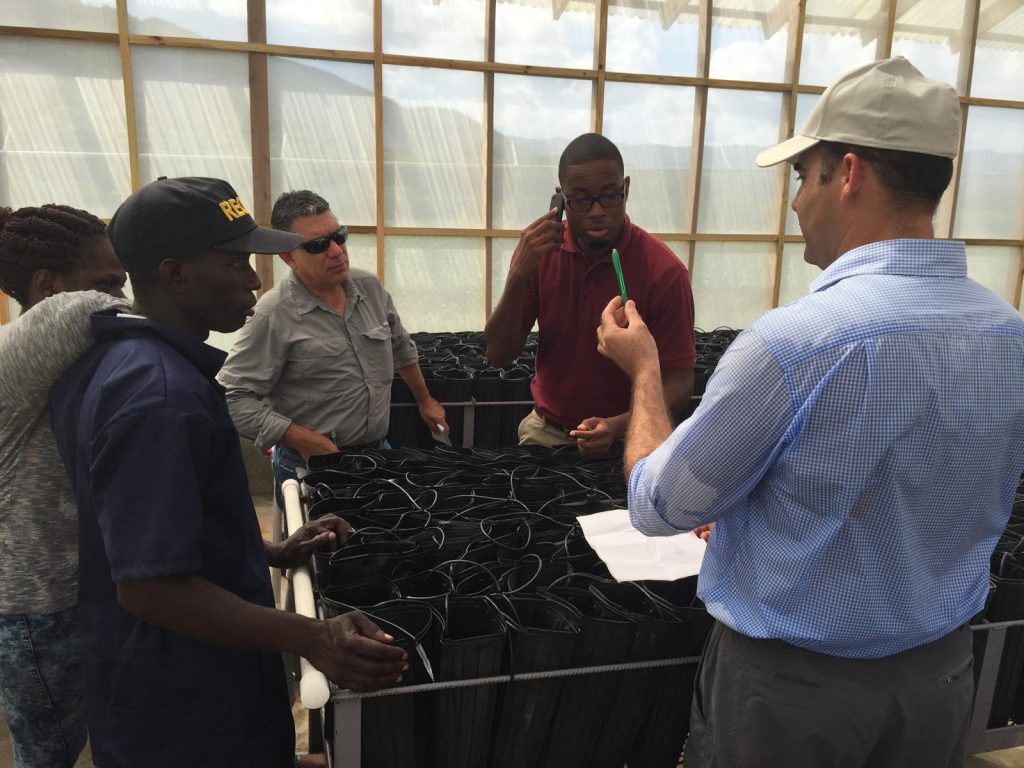
After being accepted and moving to Costa Rica, he discovered in agriculture a passion that remains one of the driving forces in his life. During his second year at EARTH, his father began building a family business where Frankys was able to apply the knowledge he was just beginning to acquire. Although he was not yet officially an agronomist and was hundreds of miles away from the project, he and his family could see how his ideas, proposals, and business plans began to take shape and generate positive results for the growth and goals of the company, which focused on the reproduction and development of citrus crop seeds.
Thanks to the connections he made during his Professional Internship at the Citrus Center in Weslaco, Texas, Frankys traveled to Brazil, where he participated in Citrus Week and connected with other producers to learn about new technological tools, including a seed extraction machine that used precise cuts to release seeds without damaging them. After returning to Mexico following graduation, and knowing they would not have access to a similar machine, he decided to design and build his own version with the help of a welder. This innovation allowed Frankys to improve working conditions for employees at the company while also streamlining production processes.
“EARTH gave me a strong technical foundation, but beyond that, it gave me a network of people who share my passion, people I know I can call from Florida to Peru, Costa Rica, or Ecuador to exchange ideas about citrus management or new agricultural tools. That connection with people from so many different places and backgrounds is invaluable”, he explains.
His company became a pioneer and benchmark within the citrus sector. But despite exponential growth, Frankys and his family decided to sell the business and move to the United States. Once there, he worked as a manager at Rucks Citrus Nursery, where he continued specializing in large-scale citrus production.
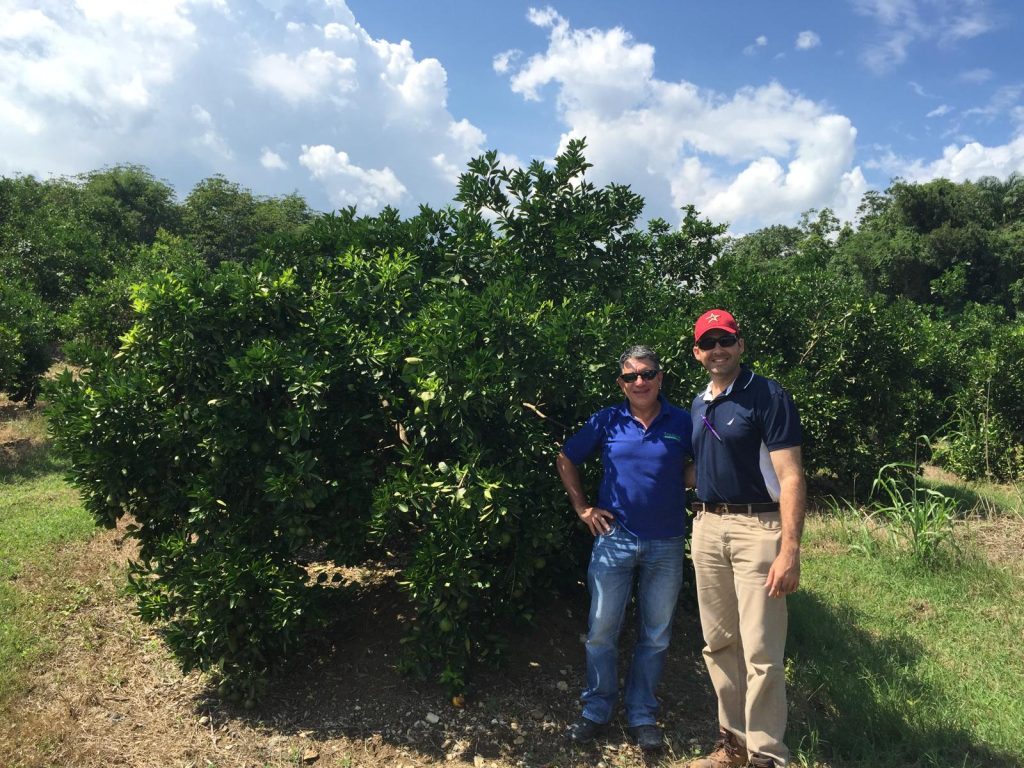
In 2022, Frankys left that role and began shaping a new family project in Florida. Together, they purchased a property outside Tampa and are currently in the early stages of building a greenhouse focused on producing tropical and subtropical fruit trees. While citrus remains an important part of his expertise, the project has expanded to include crops such as mango, avocado, guava, and peach. In a region with a complex climate that is neither fully tropical nor temperate, much of the work has involved testing materials, observing their behavior, and investing in the varieties best adapted to the environment.
Frankys’ story is marked by migration, reinvention, and major life decisions, but there is something that remains constant: his ability to observe, learn, and build anew. The curiosity he once cultivated in the classrooms and farms of EARTH now translates into new projects and new landscapes, but always with the same conviction: ideas, when nurtured with discipline and creativity, can always take root.