At EARTH, families are created in many ways. Some begin with friendships between students from different countries, while others are born in classrooms, farms, and projects. Over the years, those bonds can grow, cross borders, and ultimately link different generations. Sons, daughters, brothers, and sisters of EARTH graduates have found in the University not only a place to study, but also a family legacy shaped by agriculture, sustainability, and a desire to transform their communities.
These are two stories that reflect the essence and legacy of EARTH:
A Family That Began at EARTH
Cid Marcos Simões (Class of 1998, Brazil) and Paola Segura (Class of 2001, Costa Rica) first met at a party organized by fourth-year students to welcome the incoming class, which included Paola. Two weeks later, they were dating. When Cid graduated and returned to Brazil, their relationship depended on letters. There were also the sporadic phone calls Cid managed to make to the Guácimo Campus when he left the remote area where he lived, a place without electricity. At that time, the internet and cell phones were nothing like what we know today. Whenever those calls came through, someone from the Campus Telephone Exchange would run through the hallways or to the Harvest Center in search of Paola.
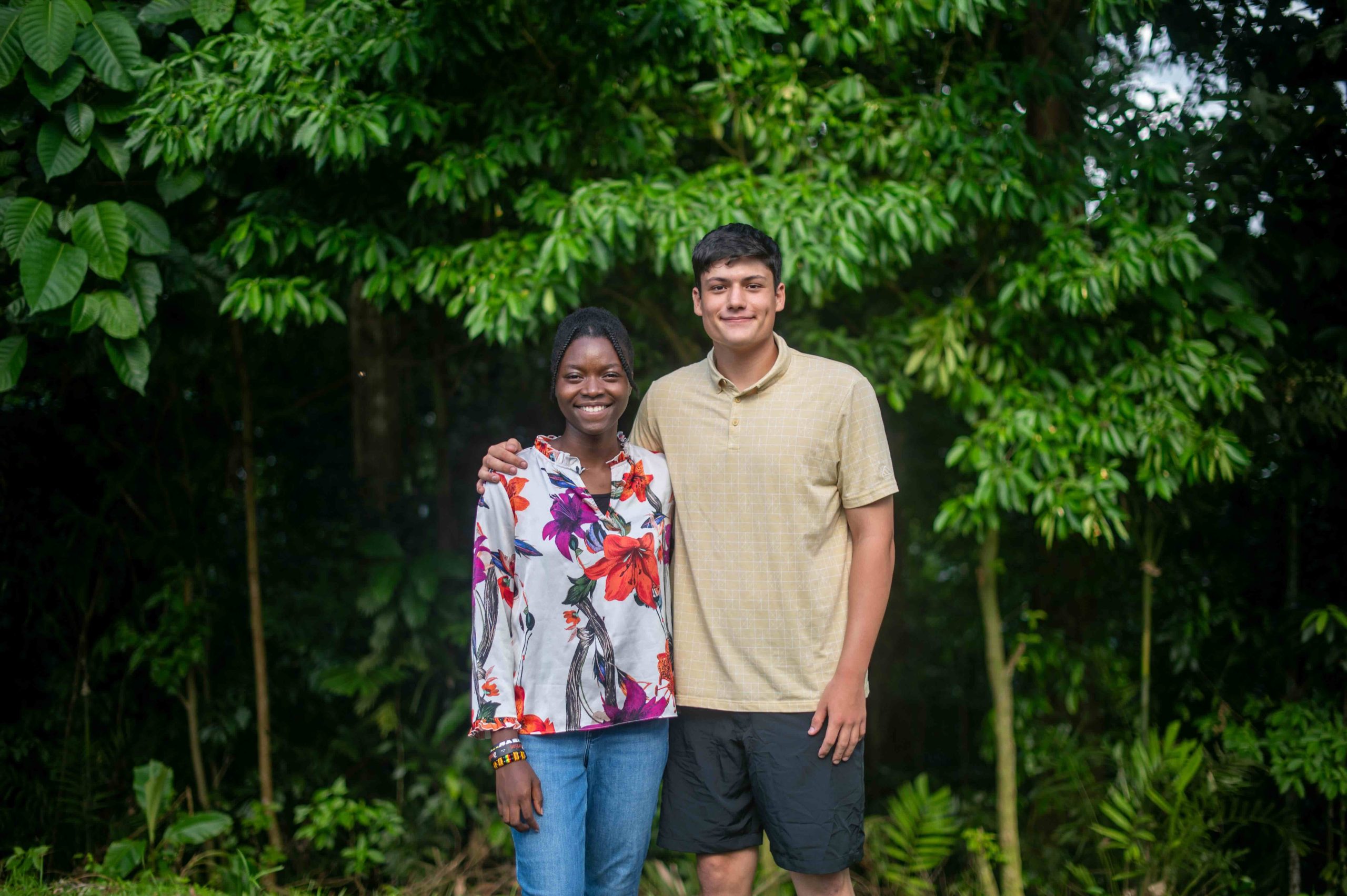
During those three years of having a long-distance relationship, they only rarely spoke or saw each other face to face. Yet in December 2001, shortly after graduating, Paola boarded a flight to Brazil. Today, more than 25 years later, they share their story while celebrating a milestone for their family: the day one of their sons, Cauã Simões Segura (Class of 2028), decided to follow in their footsteps and pursue a degree at EARTH.

“Without EARTH, I wouldn’t exist,” says Cauã as he explains why he decided to take the same path as his parents. From an early age, he watched them work tirelessly on projects that support smallholder farmers in rural areas, protect biodiversity, and innovate in sustainable agricultural practices. Cauã wanted to be part of that world. He also dreamed of living in Costa Rica, connecting with part of his heritage and with family members who lived far away.
His parents encouraged him to participate in EARTH Experience, a six-day event where prospective students immerse themselves in the essence of the University and experience life as students. After participating, Cauã had no doubts. When he was accepted to EARTH, Paola and Cid threw a big celebration. They felt this was an opportunity to “return to their roots,” as Cid describes it, and honor their alma mater.
For both Paola and Cid, the moment carried an even deeper meaning. They both attended EARTH thanks to a scholarship. At the time, their families didn’t have the resources to pay for a university education. For Cid, even leaving Brazil and moving to Costa Rica seemed like a distant dream. Years later, being able to support their son on the same path and finance his education became a powerful reminder of everything they had achieved together.

“For us, it’s not an expense, it’s an investment,” says Paola. “We feel that we were able to change our story and break the cycle of poverty in order to give our children more opportunities,” adds Cid. Paola also says that, as a mother and an EARTH graduate herself, she knows her son is in good hands, in a safe environment, and that the experience will help him grow in countless ways.
As partners in life and in business, Paola and Cid founded AMBIEM Indústria e Comércio, a company supported by a commercial network of 27 distributors serving all of Brazil. Through the company, they work with probiotic technologies applied to agriculture and the environment, supporting producers of coffee, bananas, rice, corn, and sugarcane, as well as projects focused on water restoration and bioremediation. In each initiative, they strive to apply the principles of sustainability and regenerative agriculture they learned at EARTH: reducing the use of fertilizers, restoring soil health, and demonstrating that it is possible to produce more efficiently and responsibly with natural resources. Although Cauã is only in his second year at EARTH, he has no doubt about his future: he wants to work alongside his parents.
In 2028, when Cauã graduates, his parents will travel to Costa Rica to celebrate with him. That will also be the year when, during the Graduation Ceremony, Cid will wear a turquoise stole and march in alongside his classmates, marking 30 years since they received their degrees. He will also have the honor of waiting for his son on stage when his name is called, and he will be the one who will present him with the diploma that will make Cauã a fellow EARTHian.
The Shared Dream of Two Sisters
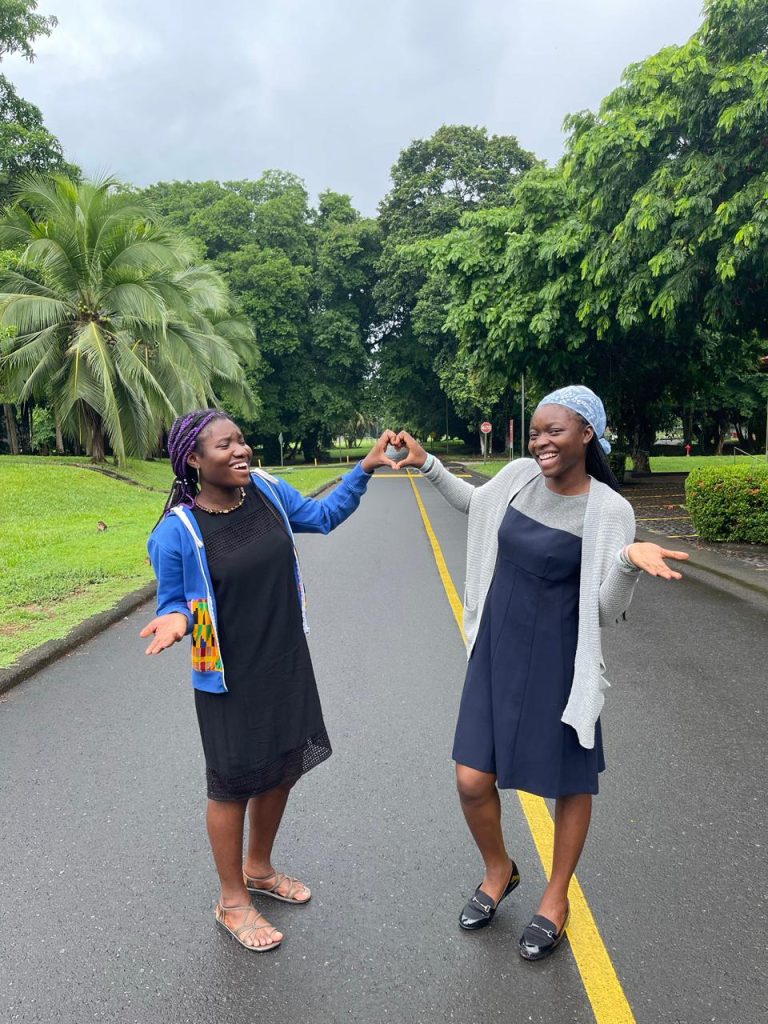
When Rhema Oyedele (Class of 2024) arrived at EARTH from Nigeria to study Agricultural Sciences, her younger sister, Erioluwadamiloju Oyedele (Class of 2027), had no intention of following the same path. In her community, Eri explains, agriculture was rarely considered a prestigious profession. Success was more commonly associated with careers such as medicine or law, and she herself planned to pursue a field that aligned with social expectations: computer science. Technology fascinated her.
As Rhema progressed through her studies at EARTH, she began sharing photos, stories, and projects with her family. Eri became increasingly intrigued. She saw drones, technology, fieldwork, innovation, and students from all over the world. Gradually, she realized that agriculture could be much broader than she had imagined, and that it could give her the opportunity to connect her interests in technology and digital tools with the study of other sciences such as genetics, plant pathology, and forestry, all part of EARTH’s curriculum.
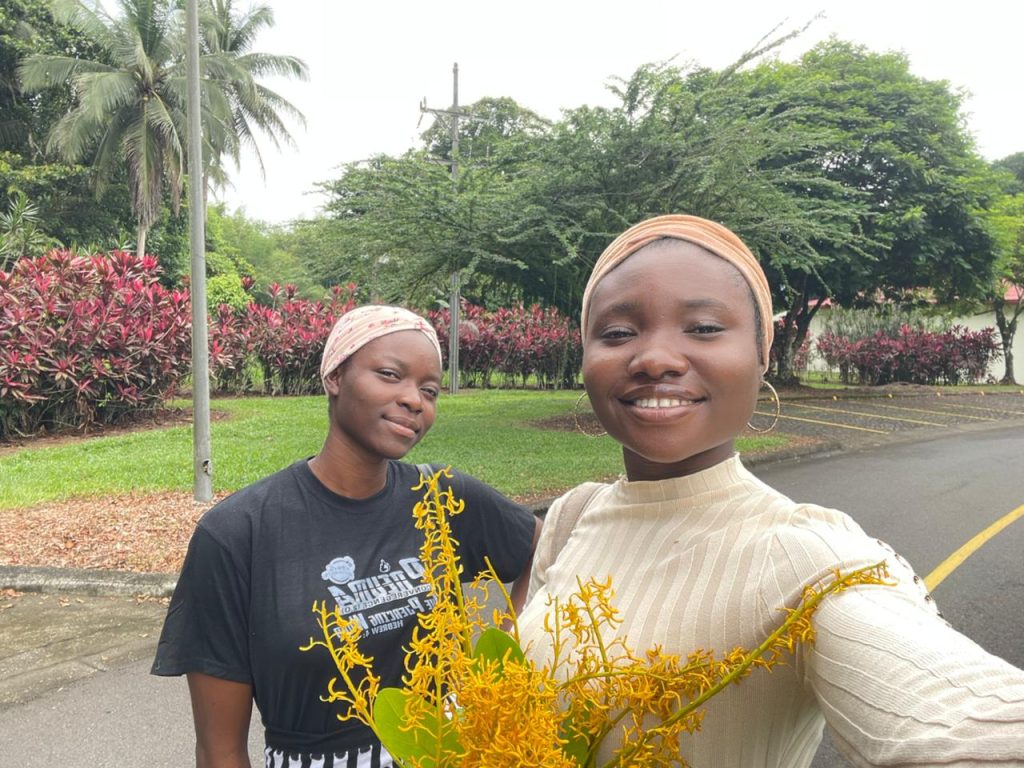
That realization led her to apply to EARTH as her sister had. Although Rhema was initially surprised, the news filled their family with excitement. For their parents, it meant watching both of their daughters leave for another continent in pursuit of opportunities they themselves had never had.
For one year, the sisters shared life on campus. Rhema was in her fourth year, while Eri was just beginning her university journey and learning Spanish. Having her sister nearby made all the difference. “It was like having my parents with me,” Eri says. “Whenever something happened, I would go to her dorm and she would help me understand what I was going through.” Rhema supported Eri through the adaptation process and helped her navigate the cultural and academic differences of an entirely new experience. When Rhema graduated and moved to the United States to begin a master’s degree at Kentucky State University, saying goodbye was difficult. Even so, they continue supporting one another from afar, just as they had done years ago.
Today, Rhema works as a research assistant in aquaponic and aquaculture systems, focusing on fish production and water quality management. Eri, meanwhile, is in her third year at EARTH, exploring areas where digital agriculture, technology, and plant sciences converge. Although their interests differ, both envision a future in which they work together. They dream of returning to Nigeria, starting an agricultural business, and founding an organization that supports women and girls—like themselves—who are interested in agriculture.
Beyond university degrees and professional careers, the stories of these families show how an educational experience can also become a bridge between generations. For some, EARTH was the place where a love story began. For others, it was the space that allowed them to imagine a future different from the one they thought was possible, a future where dreams are shared between sisters, and between parents and children.