Alumni Stories

Utilizing Weed Science to Protect Crops and Promote Leadership among Farmers

Growing up, Emmanuel Cooper Gonfatee (Class of 2015, Liberia) often spent time visiting his uncle’s farm. From these visits, Emmanuel developed an early interest in farming. But he never considered that he could study agriculture and pursue a career in the field until his uncle, who worked for the Ministry of Agriculture, encouraged him to study Agricultural Sciences. During his second year studying agriculture at the University of Liberia, an EARTH University professor visited to recruit candidates for an Open Society Foundation scholarship. Having never heard of EARTH, Emmanuel reluctantly accompanied a friend to the presentation. He was immediately captivated by a short “Life at EARTH” video that demonstrated EARTH’s hands-on approach to education, and he decided to start his application at that moment. 

After receiving a scholarship, and once he arrived to EARTH, everything he had seen in the recruitment video came to life. He appreciated how the field and the lab were also his classroom. Today he reflects fondly on the support system made up of faculty and staff; they would always “go the extra mile to make sure students were well cared for.” The group work dynamic embedded into all the courses was another element that allowed him to think in a collaborative way, part of the skills he continues to use today. 

Following his graduation, Emmanuel returned home to Liberia, where he worked on a USAID project that focus on improving agricultural investment in Libera. There he began to encourage farmers to look at farming on a bigger scale and to begin viewing production as a business. This role allowed him to apply the multifaceted approach to agronomy he learned at EARTH to support local farmers. He encouraged and taught farmers to find the link between their needs, how policy can support their needs and goals, and how to attract investment into their business.

Emmanuel later completed a program at Ohio State University focusing on integrated pest management before returning to Liberia where he worked as a short-term instructor in environmental science. He appreciated the opportunity to share with students the knowledge he gained at EARTH and in the professional world on the importance of environmental science and sustainability. While he taught, Emmanuel also ran his own NGO focused on tackling substance abuse in Liberia. Through both experiences, he noticed that many students did not know what kinds of options existed for their future. In being able to open young people’s minds and support youth by sharing knowledge, he exposed them to different career paths. 

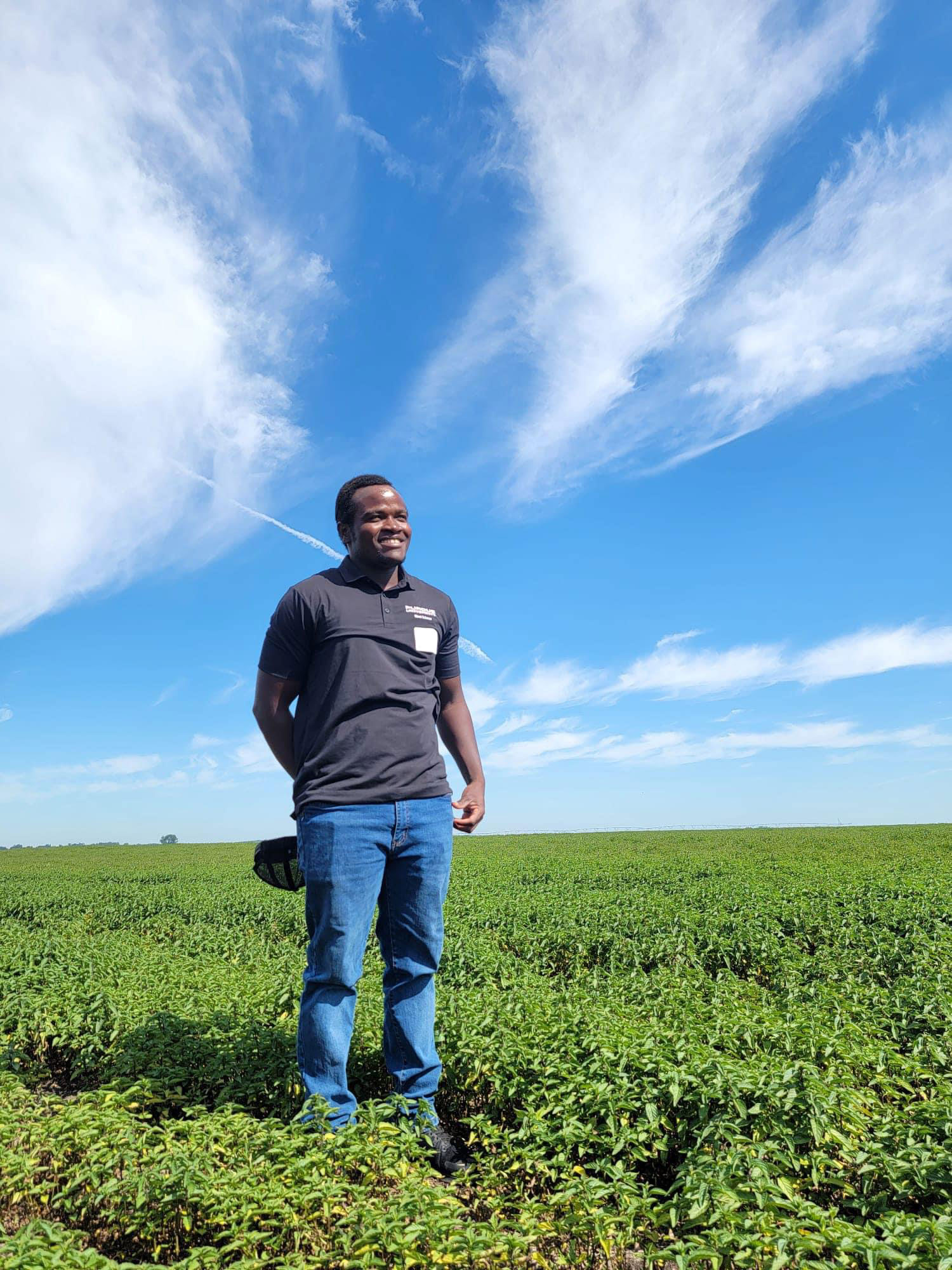
Emmanuel then obtained a Master’s in Weed Science from the Horticulture department at Purdue University, where he researched organic sustainable measures of weed control in different horticulture crops. He then, in 2025, began a PhD program at the same university, focusing on the use of technology for site specific weed management. Emmanuel sees this science as one of the largest challenges for farmers and growers globally, and seeks to help farmers close the gap between protecting their crops and feeding people by implementing innovative technology. Some of the tools he has explored are drones that detect the early emergence of weeds and site-specific spray instruments to control weeds, both of which reduce chemical input use. Further, he is working to design and evaluate a digital tool that can easily enter the soil and detect weed seeds, helping farmers to understand what weeds they are dealing with and how they can best protect their crops. 

“EARTH was the key factor of my exposure to everything I’m currently doing,” says Emmanuel. 

 He credits the technical knowledge, practical experience, and connections that he made at EARTH to opening doors for him after graduation. Before coming to EARTH, Emmanuel–like many of the young people he interacted with in Liberia–had a narrow view of the possibilities of what he could do, but EARTH opened his mind to innovative career paths within agricultural science. Additionally, EARTH’s focus on sustainability and the environment made him conscious of all his actions and how all ecosystems play into the bigger world. “EARTH teaches you to be resilient and ready for whatever challenge,” says Emmanuel. 

Recently, during his first year as a PhD student, Emmanuel helped organize the first ever digital agriculture symposium at Purdue University. Through his EARTH connection, he reached out to a professor to promote the symposium, and five EARTH students presented at the symposium. Creating this connection gave students a professional platform to exhibit their research and showcase what EARTH is doing. Moreover, it allowed Emmanuel to give back to EARTH in terms of providing a professional platform for student research along with mentorship and advice. 

Looking towards the future, Emmanuel’s long-term goal is to return home to Liberia and promote sustainable and effective agricultural practices. He knows there is a lot that still needs to be done in Liberia in terms of policy and technical expertise, but he hopes to be an active contributor to innovative approaches to farming in his home country and for his people. 

Scroll to Top
Support our Greatest Needs

Thank you for making a gift towards our greatest needs.  To make a one-time gift via debit or credit card, please select an amount below.  

If you would like to make a gift using a different payment method, please contact us at

info@earth-usa.org or +1 404 995-1232.